



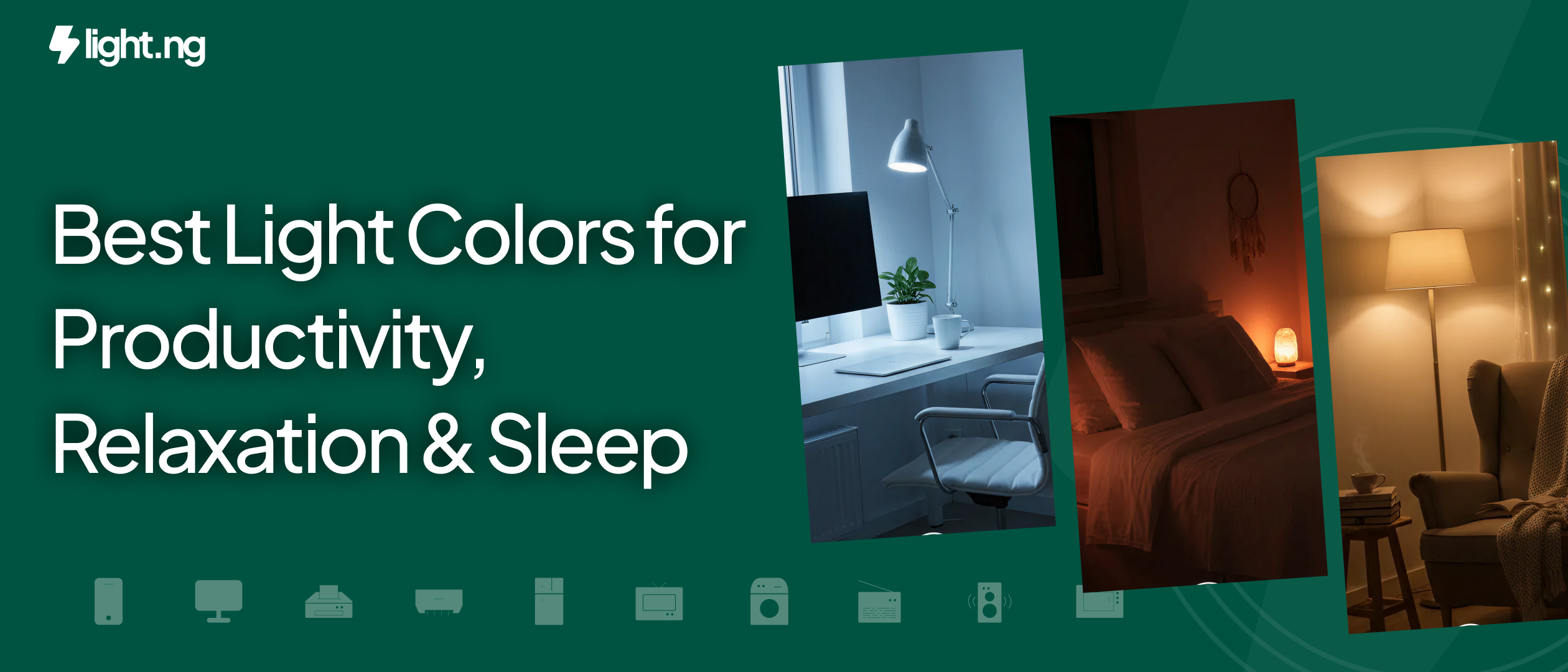
Lighting does more than just illuminate a room, it shapes how you feel. From boosting focus during work to helping your body wind down at night, the color of light can dramatically influence mood, energy, and sleep quality. Yet, most people focus only on brightness, missing out on the powerful effects of color temperature. At LightNG, we know the difference the right lighting can make, and we’re here to guide you through it.
Understanding Light Color (Color Temperature)
Light color is measured in Kelvin (K). The lower the Kelvin number, the warmer and softer the light; the higher the number, the cooler and brighter it appears. Here’s a quick guide:
- 2700K–3000K: Warm, yellowish light
- 3500K–4100K: Neutral white
- 5000K–6500K: Cool, daylight-like light
Understanding these ranges makes picking the right light for your space simple.
1. Best Light Colors for Productivity
When it’s time to focus, your brain responds best to cool, daylight-inspired lighting. This kind of light keeps you alert, reduces eye strain, and helps maintain concentration. That’s why offices, studios, and classrooms favor bright, cool bulbs over warm, yellow lights.
Why Cool Light Works:
- Improves text clarity and color contrast
- Reduces drowsiness
- Keeps your brain in “work mode”
Ideal Light Colors:
- Cool white
- Bright daylight
- Soft blue-tinted white
Where to Use Them:
- Home office or study desk
- Kitchen and laundry room
- Reading corners or craft areas
Recommended Bulbs:
- 5000K–6500K LED bulbs
These bulbs create a crisp, energizing environment that helps you stay productive without fatigue.
2. Best Light Colors for Relaxation
Relaxing after a long day requires warm, cozy lighting. These soft tones signal your body to slow down, reduce stress, and create a welcoming atmosphere.
Why Warm Light Helps:
- Mimics the colors of sunset
- Lowers stress levels
- Softens shadows, making spaces feel gentle
Ideal Light Colors:
- Warm white
- Amber
- Soft golden yellow
Where to Use Them:
- Living room and lounge areas
- Bedrooms (evening)
- Dining spaces and hallways
Recommended Bulbs:
- 2700K–3000K LED bulbs
Even a brightly lit room feels soothing when you use warm light.
3. Best Light Colors for Better Sleep
Exposure to bright or blue-toned lights at night can suppress melatonin, the hormone that helps you fall asleep. To improve sleep, switch to soft, amber or red-tinted lights.
Why Warm, Low-Intensity Light Works:
- Signals your brain that night has arrived
- Encourages natural melatonin release
- Creates a calm environment for winding down
Ideal Light Colors:
- Amber glow
- Dim warm white
- Red-tinted warm light
Where to Use Them:
- Bedroom (night-time)
- Nursery
- Reading lamps before bed
- Bathroom for nighttime use
Room-by-Room Lighting Tips
Bedroom:
- Day: Neutral or warm white
- Night: Dim warm or amber
- Avoid daylight bulbs entirely
Living Room:
- Warm white for comfort
- Layer with lamps in the evening
Kitchen:
- Cool white or daylight to see clearly
Office/Study:
- Daylight bulbs only for focus
Bathroom:
- Neutral or cool white for grooming
- Dim warm light for night use
Outdoor Spaces:
- Warm for ambiance
- Cool for visibility and security
Common Lighting Mistakes
Many homes use the wrong bulb in the wrong space without realizing it. Avoid these:
- Daylight bulbs in the bedroom
- Warm bulbs in workspaces
- Bright white lights at night
- Relying only on overhead lights
- Mixing too many color temperatures
Small adjustments can completely transform how your home feels.
Quick Reference
- Productivity: Cool white / daylight (5000K–6500K)
- Relaxation: Warm white (2700K–3000K)
- Sleep: Very warm or amber (<2700K)
The right lighting can improve focus, enhance your mood, and even boost sleep quality. By pairing each room with its ideal light color, you make your home more comfortable, functional, and aligned with your daily rhythm.
At LightNG, we believe in empowering your everyday life, whether through seamless electricity management or smarter lighting choices. Brighten your home and your day, one bulb at a time.
For related blogs, click here